
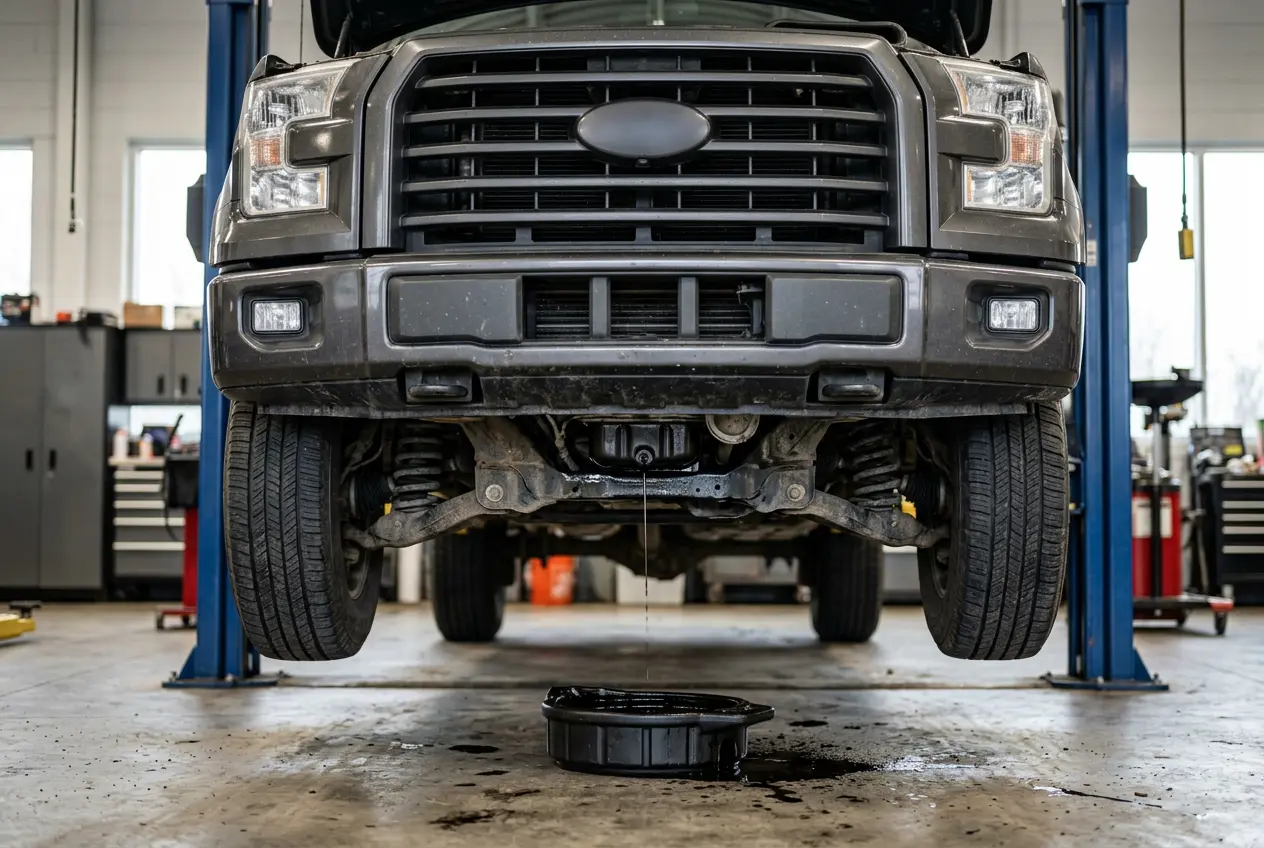
Oil spots under your 2017-2018 Ford F-150, Ford Expedition, or Lincoln Navigator with the 3.5L EcoBoost engine usually point to one specific problem: the oil pan RTV silicone seal losing adhesion. Ford addressed this in Technical Service Bulletin 20-2051, which covers vehicles built before the February-March 2018 production cutoff. The fix is a new oil pan (part number HL3Z-6675-A) resealed with Motorcraft TA-357 RTV. It is a real repair, not a recall, so cost depends on your warranty status.
Which trucks does TSB 20-2051 cover?
The bulletin applies to the 2017-2018 Ford F-150, 2018 Ford Expedition, and 2018 Lincoln Navigator, all equipped with the 3.5L EcoBoost (twin-turbocharged V6) engine. The production cutoff is roughly February 2018 for the F-150 and March 2018 for the Expedition and Navigator. Trucks built after those dates received an updated pan from the factory.
If you are not sure of your build date, check the sticker on the driver-side door jamb. The month and year of manufacture are printed there.
What causes the oil pan to leak on the 3.5L EcoBoost?
The 3.5L EcoBoost oil pan does not use a traditional stamped gasket. It uses a bead of RTV silicone applied at the factory to seal the pan rail to the engine block. Over time, that original RTV bead can lose adhesion, especially along the corners and seams where flex is greatest. Once the seal breaks down, oil seeps out slowly and collects under the truck.
There is no DTC code for this. The check engine light will not come on. The only signs are the drip pattern on your driveway and a gradually falling oil level on the dipstick.
How does the leak progress if you ignore it?
| Stage | What you notice | Risk level | Urgency |
|---|---|---|---|
| Early | Small spots on driveway, oil level drops slowly over weeks | Low | Schedule within 2-4 weeks |
| Mid | Visible wet film on pan, oil smell from engine bay, level drops faster | Moderate | Schedule this week |
| Late | Oil pressure warning light, smoke from undercarriage, heavy drip | High | Stop driving, call for service |
Is it safe to keep driving with this leak?
A slow seep at the early stage gives you some time, but you need to check the dipstick every few days. The 3.5L EcoBoost holds about 6 quarts of oil. Losing even 1.5-2 quarts puts the engine in a low-oil condition that accelerates wear on the turbochargers and bearings.
If the oil pressure warning light comes on, pull over and shut the engine off. Do not drive it to the shop. Call for a tow. Running a turbocharged engine with low oil pressure can cause catastrophic damage in minutes.
What does the TSB 20-2051 repair actually involve?
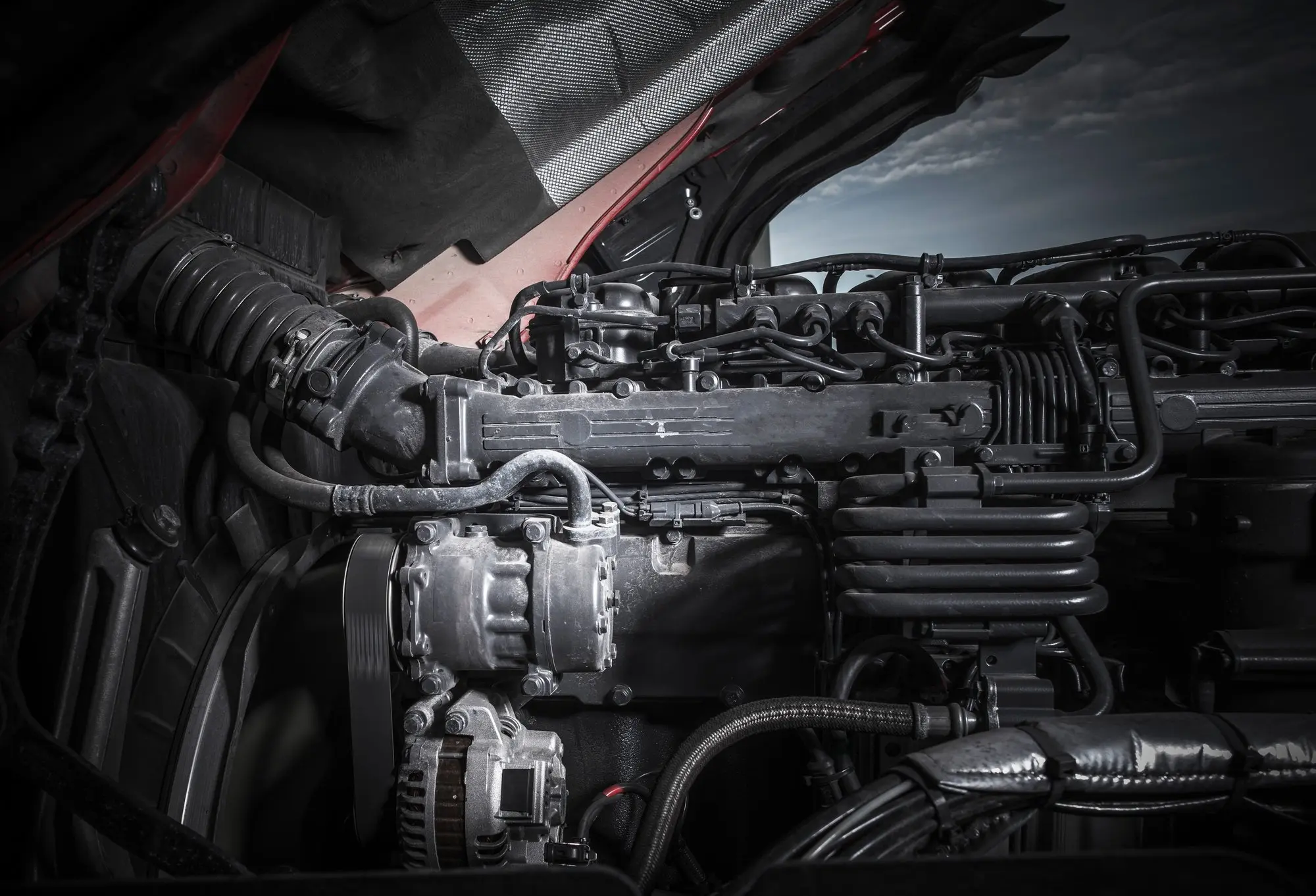
The procedure calls for draining the oil, removing the oil pan (part 6675, replaced by HL3Z-6675-A), cleaning the mating surfaces thoroughly, applying a fresh bead of Motorcraft TA-357 RTV, and allowing proper cure time before refilling with oil. The repair also requires removing certain components for access, which adds labor time depending on the specific model.
On the F-150, access to the pan is more straightforward than on the Expedition and Navigator, where additional underbody components may need to come off first. Labor time varies by model.
What does this repair cost?
There is no single number without seeing the specific vehicle. Here is what moves the price:
- Warranty status: If your truck is still within Ford’s powertrain warranty, the repair may be covered. Call Ford with your VIN to confirm. Out-of-warranty vehicles pay for parts and labor.
- Model: F-150 labor is generally lower than Expedition or Navigator because of access differences.
- Oil and filter: The oil is drained as part of the job, so a fresh fill is included. The grade and quantity matter for the 3.5L EcoBoost (Ford specifies 5W-30 full synthetic).
- Condition of the pan rail: Heavy corrosion on the mating surface can add time for cleaning or surface prep.
Anyone giving you a firm price without looking at the truck is guessing. A proper estimate starts with a visual inspection of the pan and the seal area.
Is this a recall? Does Ford fix it for free?
No. TSB 20-2051 is a Technical Service Bulletin, which is a documented repair procedure Ford issued to dealerships and independent shops. It is not a recall. A recall is a free remedy mandated by NHTSA for a safety defect. A TSB is guidance on how to fix a known issue correctly.
To check whether your specific VIN has any open recalls, use the NHTSA recall lookup tool. For warranty questions, contact Ford Owner Support with your VIN. The full TSB is publicly available as NHTSA document MC-10171915-0001.
If you commute on I-95 through Fredericksburg, you already know the Fredericksburg Crawl. That stop-and-go stretch puts extra heat cycles on the engine and turbochargers, and a small oil leak that might stay stable on a steady highway run can progress faster under those conditions. Checking the dipstick regularly costs nothing.
How do you confirm the leak is the oil pan seal and not something else?
Other sources of oil leaks on the 3.5L EcoBoost include the valve cover gaskets, the turbocharger oil feed lines, and the rear main seal. A proper diagnosis means getting the truck on a lift, cleaning the undercarriage, and tracing the leak to its source after a short drive. Assuming it is the pan without that step can lead to replacing the wrong part.
The diagnostic process at Express Auto Service starts with a lift inspection to confirm the leak origin before any parts are ordered.
Frequently Asked Questions
Does Ford TSB 20-2051 mean my repair is free?
No. A Technical Service Bulletin is a repair procedure for technicians, not a recall. The repair is not covered at no charge unless your vehicle is still within its factory warranty or you have an extended service plan. Check your coverage before you book.
How long can I drive with an oil pan leak?
A slow drip is not an immediate emergency, but it becomes one fast if the oil level drops too low. Check the dipstick every few days and stop driving if the level falls below the minimum mark or the oil pressure warning light comes on.
What vehicles does this oil pan seal issue affect?
Ford TSB 20-2051 covers 2017-2018 Ford F-150, Ford Expedition, and Lincoln Navigator trucks built with the 3.5L EcoBoost engine before the February-March 2018 production cutoff dates.
What parts are used in the repair?
The repair replaces the oil pan (Ford part number HL3Z-6675-A) and reseals it using Motorcraft TA-357 RTV silicone. The original pan used an RTV bead that can lose adhesion over time.
Will the oil pan leak come back after the repair?
When the pan rail is properly cleaned and the new RTV bead is applied and cured correctly, the repair is durable. Cutting corners on surface prep is the main reason reseals fail a second time.
Bring your F-150, Expedition, or Navigator to Express Auto Service at 2201 Emancipation Highway in Fredericksburg. Mark Ritchie, owner and ASE Certified technician, and the Express Auto team will put your truck on a lift, confirm whether TSB 20-2051 applies to your build date, and give you a straight answer on what the repair involves. Free local rides to home or work are available while your truck is in the bay. Express Auto Service is AAA Approved and BBB Accredited.
Related reading: Toyota/Lexus V6 oil leak: the 2GR-FE VVT-i oil line problem | 2010-2013 Equinox or Terrain burning oil? The 2.4L Ecotec fix | Engine repair in Fredericksburg, VA | Oil changes at Express Auto Service | Auto repair services in Artillery Ridge, VA
Sources

Mark Ritchie is the Owner and Manager of Express Auto Service. With more than 25 years of automotive experience, he is ASE Certified and a Virginia Emissions Inspector. Mark shares practical automotive maintenance and repair insights to help drivers make informed decisions about caring for their vehicles.