
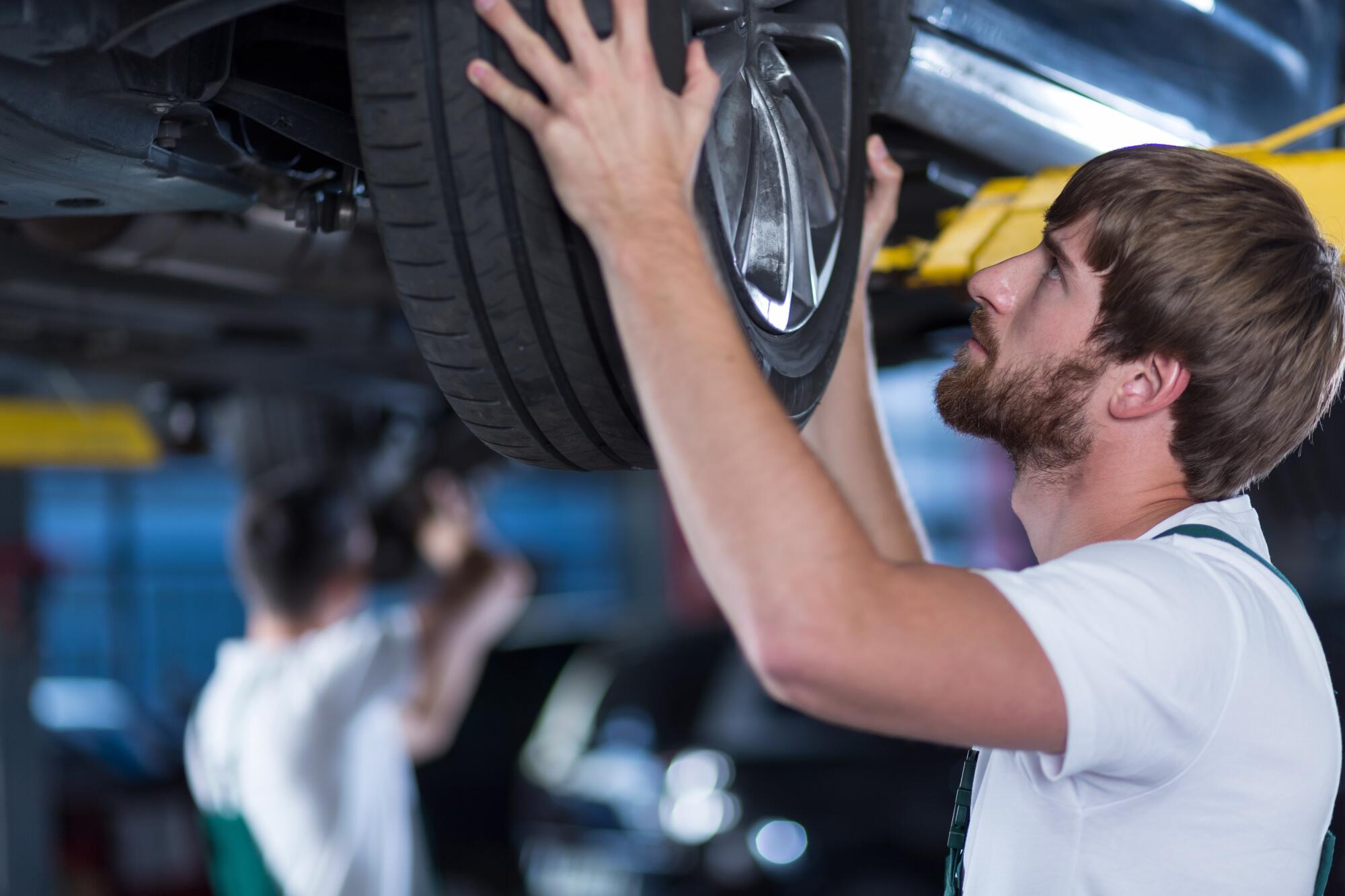
Imagine this situation: you’re enjoying a relaxing ride in your car. As you get to where you need to be, you brake — and the car starts to shake.
Though this is a common scenario, it can be fairly alarming. Any shaky car is a safety concern, especially if you can’t identify the cause. Some of these issues are easy to fix, but many will require professional repairs.
Feel like googling, “Why is my car shaking when I stop?” No need — you’re already in the right place! Here are some common reasons your car vibrates when you brake and what to do about them!
Damaged Brake Pads
Damaged brake pads are the number one cause of many brake problems. This component is responsible for creating friction when you brake. As brake pads wear out over time, they can become thinner and cause vibrations.
A visual inspection of your brake pads should tell you enough about their health. If they’re less than 0.1 inches thick, you should replace them. The same applies if you notice any splits, cracks, or missing chunks of material.
Misaligned Wheels
If your wheels are loose or misaligned, they can shake when you brake. This, in turn, causes the entire vehicle to vibrate as well. Common signs of misalignment include the wheel being off-center and uneven tire wear.
If your wheels are misaligned, head to a mechanic to have them balanced. If not, you may still need to replace worn-out tires or wheel bearings. You can catch these issues on time by having a regular vehicle maintenance schedule.
Warped Brake Rotors
Brake rotors are circular discs your brake pads brace to stop your car. If they’re warped or damaged, they can cause car vibrations when you brake. Hard braking is a particularly common cause of warped rotors.
To figure out if your brake rotors are warped, look for hot spots or uneven surfaces. You can also measure the rotors’ thickness with a straight edge or runout gauge. If they’re warped, you’ll need to replace them.
Transmission and Engine Issues
The transmission and engine aren’t parts of the braking system, but they still affect the brakes. If the transmission isn’t shifting properly, for instance, it may cause the brakes to shake every time you engage them.
Leaks and loose parts are common signs of transmission and engine issues. Keep in mind that a faulty engine can cause many other issues with the car. Seek out mechanic advice if you’re not sure how to proceed.
Why Is My Car Shaking When I Stop?
As you can see, there are many potential answers to, “Why is my car shaking when I stop?” If this guide doesn’t help you pinpoint the exact cause, your best bet is to take your car to a mechanic and see what they say.
In need of car repair services in Fredericksburg, VA? Our team of experts at Express Auto will take care of any car issues for you! We also offer a free shuttle service within 10 miles of our shop — schedule an appointment now!

Mark Ritchie is the Owner and Manager of Express Auto Service. With more than 25 years of automotive experience, he is ASE Certified and a Virginia Emissions Inspector. Mark shares practical automotive maintenance and repair insights to help drivers make informed decisions about caring for their vehicles.