
Underinflated tires can lower gas mileage by 0.2% for every 1 PSI drop in pressure. On the other hand, proper tire pressure can improve tire pressure by up to 3%.
Ensuring the correct tire pressure also impacts safety on the road and the longevity of your tires.
That’s why knowing how to inflate tires properly and check your tire pressure regularly is essential. Keep reading to learn more about proper tire inflation.
How to Read Tire Pressure Gauge
The first step in learning how to inflate tires is understanding how to read your tire pressure gauge. There are two main types – the pencil-style gauge and the digital gauge.
With a pencil-style gauge, you simply press the tip onto the tire valve stem and apply pressure. The measurement will be displayed on the gauge.
For digital gauges, they have an easy-to-read LCD screen. Simply turn on the gauge and press the tip to the valve stem. The tire pressure will display.
For both types, you may need to reset them before taking another measurement.
Recommended Tire Pressure Levels
Once you know how to read the gauge, it’s time to inflate tires to the proper PSI. Recommended tire pressure levels can be found in your owner’s manual or on a sticker inside the driver’s door jamb.
Do not exceed the maximum PSI listed. Inflate to the higher end for heavy loads or lower end for lighter loads. Tire pressure decreases by 1 PSI for every 10 degrees Fahrenheit drop in temperature. This means winter tire pressure should be slightly higher for optimal performance.
How to Inflate Tires
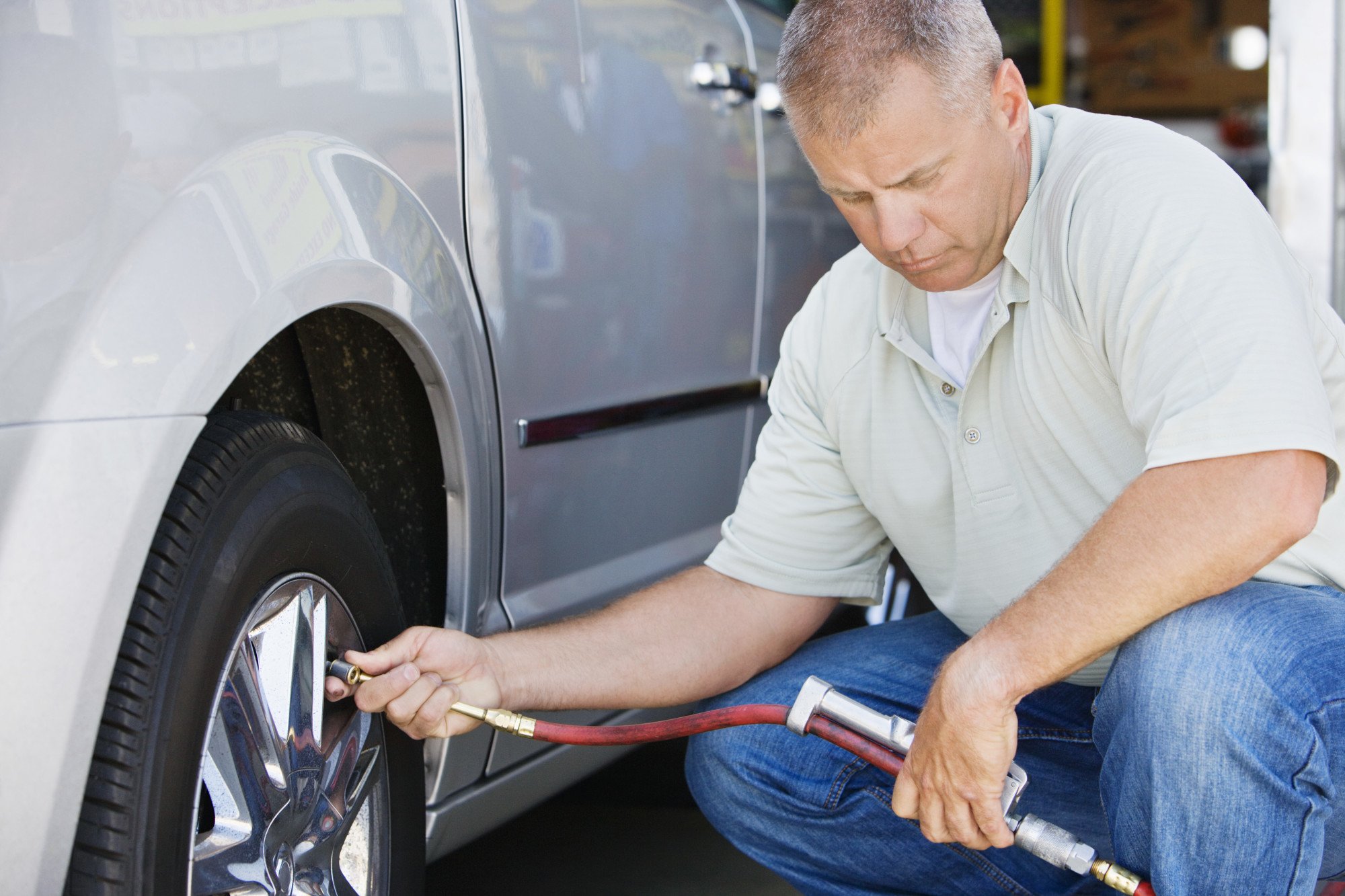
Check your tire for deflation. With your desired PSI in mind, below are the steps for how to properly inflate tires:
- Remove the valve stem cap and firmly press the tire gauge onto the valve stem
- If the pressure is low, inflate to the desired PSI level using a pump at a gas station or portable compressor
- Re-check the pressure with your tire gauge to ensure accurate inflation
- Replace the valve stem cap
Repeat this process for each tire, inflating to the recommended PSI. Visually inspect tires for any cracks, bulges, or foreign objects.
Can You Drive With Low Tire Pressure?
It’s not recommended to drive with low tire pressure. This is because it can damage tires, affecting your vehicle’s performance and safety.
Low tire pressure can cause poor handling, reduced braking ability, increased risk of hydroplaning, and lower gas mileage.
What About Overinflated Tires?
Overinflated tires are not good either. They are harder and stiffer, making them less effective at absorbing shock from bumps and potholes. The result is reduced comfort and ride quality.
Overinflated tires are also more susceptible to damage, including punctures and cuts from road debris. They have reduced contact with the road, hence less traction and stability. This affects your steering and braking performance.
Contact Us for All Your Vehicle Maintenance Needs
Understanding how to inflate tires is vital for vehicle owners.
Following the abovementioned steps and using an accurate tire pressure gauge can help you maintain proper inflation. And if you need any help with your vehicle’s maintenance, Express Auto Service is here to help.
Feel free to contact us today to schedule an appointment and get a free estimate. Our team can’t wait to serve you!

Mark Ritchie is the Owner and Manager of Express Auto Service. With more than 25 years of automotive experience, he is ASE Certified and a Virginia Emissions Inspector. Mark shares practical automotive maintenance and repair insights to help drivers make informed decisions about caring for their vehicles.